
CBN vs. CBD for Sleep: Differences, Benefits & What Research Shows
Posted by Rare Cannabinoid Company on Oct 15th 2026
Originally published May 5, 2022. Substantially updated October 15, 2026.
Tired of being tired? Meet CBN and CBD—two hemp cannabinoids that bring different possibilities to your nighttime routine. CBN takes the spotlight for sleep, with encouraging human research on fewer nighttime awakenings and, at a higher studied dose, falling asleep faster. CBD brings the calm, making it a popular companion for winding down. [1–3]
Whether you love a simple, sugar-free oil or a tasty bedtime gummy, there’s plenty to explore. Choose CBN on its own, pair it with CBD, or discover a blend with THC for a dreamy, euphoric feel.
Here’s how these cannabinoids compare—and how to find your favorite nighttime formula.
Key takeaways
-
Meet your nighttime cannabinoid: CBN. Short for cannabinol, CBN is gaining attention for sleep support, with human trials reporting fewer nighttime awakenings and other encouraging benefits. [1, 2]
-
Bring on the calm with CBD. Cannabidiol, better known as CBD, is a popular choice for relaxation—whether you’re taking a daytime breather or settling into your evening.
-
Enjoy both in one gummy. CBN + CBD formulas make it easy to include both cannabinoids in a convenient, flavorful nighttime routine.
-
Choose your experience—with or without THC. Prefer to skip the high? Explore THC-free options. Enjoy THC’s dreamy feel? There’s a nighttime blend for that, too.
-
Keep it melatonin-free. Rare Cannabinoid Company adds no melatonin, giving you clearly labeled cannabinoid formulas and more control over what goes into your routine.
What is the difference between CBN and CBD?
Think of CBN as the nighttime specialist and CBD as the versatile relaxation companion. Both come from hemp and cannabis, but each brings its own character to a formula.
CBN—cannabinol—is the one to explore when sleep is your focus. It forms as THC ages and changes, yet purified CBN can be formulated without THC. That gives you options: enjoy CBN on its own, combined with CBD, or in a blend that includes THC. [1, 2]
CBD—cannabidiol—fits into moments of calm throughout the day and evening. Some people enjoy feeling relaxed and comfortably focused; others reach for it when it’s time to leave the day behind.
Ready to explore? Start with your preferred format: a simple CBN oil, a huckleberry-flavored CBN + CBD gummy, or a dreamy THC + CBN blend. Check the cannabinoid amounts per serving to find the formula that suits you.
What is the difference between CBN and CBD?
CBN and CBD differ in their chemistry, research, and how they are used in products. CBN is a minor cannabinoid associated with nighttime formulas. CBD is a more widely known cannabinoid used in both daytime and evening products.
CBN forms as THC undergoes chemical changes during aging and exposure to oxygen. However, a finished CBN product does not necessarily contain THC: its actual composition depends on extraction, purification, and formulation. CBD is a separate cannabinoid, not another name for CBN. [1, 2]
For shoppers, the practical distinction is the formula. “Hemp extract” alone is not enough information. Look for the individual amounts of CBN, CBD, and THC, then check the product’s laboratory report.
CBN vs. CBD: What are the key differences?
What do the names mean?
CBN stands for cannabinol. CBD stands for cannabidiol. They are separate cannabinoids that can be used individually or together.
What are they commonly used for?
CBN is a popular choice for nighttime relaxation and sleep support. CBD is widely used for calm, balance and relaxation during the day or evening.
What does sleep research show?
Human CBN trials have reported fewer nighttime awakenings and, at a higher studied dose, faster sleep onset. CBD research has also reported benefits for well-being and some sleep measures. [1–3]
What formats are available?
Both come in oils, gummies and capsules. CBD is also commonly available in topical products.
Do they contain THC?
You can choose CBN and CBD products with or without THC. Check the labeled cannabinoid amounts and batch report to find your preferred formula.
Can you take CBN and CBD together?
Yes. Combined formulas bring sleep-focused CBN and calming CBD into one convenient serving.
What should you compare when shopping?
Look at the amount of each cannabinoid per serving, whether THC is included, and the complete ingredients—including any added melatonin.
Is CBN or CBD better for sleep?
For someone specifically exploring nighttime cannabinoids, CBN is a logical ingredient to investigate. Whereas, CBD may fit a broader relaxation routine.
Ask a more useful question: What do you want your nighttime product to do, and what evidence supports that particular formula?
“Better sleep” can mean falling asleep sooner, waking fewer times, spending less time awake overnight, or feeling more rested. These are separate outcomes. A study can find an improvement in one without finding an improvement in the others.
That distinction makes the research more useful. Instead of treating every sleep claim as interchangeable, look for the outcome researchers measured and the ingredients they actually tested.
What does human research say about CBN for sleep?
Human clinical trials offer encouraging evidence for CBN’s role in supporting restful sleep. Two studies highlight benefits ranging from fewer nighttime awakenings to falling asleep faster at a higher studied dose.
A seven-night trial found fewer nighttime awakenings
A randomized, double-blind, placebo-controlled trial published in 2024 analyzed 293 adults with poor self-rated sleep. Participants received placebo, 20 mg CBN, or 20 mg CBN with different amounts of CBD for seven nights.
Compared with placebo, 20 mg CBN significantly reduced nighttime awakenings and overall sleep disturbance without increasing daytime fatigue. These findings highlight CBN’s potential to support a less interrupted, more restful night without added next-day tiredness. [1]
A 2026 sleep-laboratory trial finds faster sleep onset and better perceived sleep quality
A randomized crossover trial published in 2026 compared single doses of 30 mg CBN, 300 mg CBN, and placebo in 20 adults experiencing sleep difficulties.
The 300 mg dose helped participants fall asleep faster and improved their perceived sleep quality, with additional findings showing increased stage-two sleep and fewer brain-wave arousals. These encouraging secondary results expand the human evidence for CBN’s sleep-support potential. [2]
The study’s main measure—time awake after initially falling asleep—did not significantly change. Each condition was tested for one night, and the higher research dose should not be interpreted as a suggested starting serving.
What this means for shoppers: CBN has a growing human evidence base. The strongest way to interpret it is to connect each finding to its dose, formula, and outcome—not assume every CBN product has been clinically tested.
Does CBD help you sleep?
CBD is a popular choice for evening relaxation, and human research has identified encouraging benefits for well-being and sleep efficiency.
In a 2024 pilot trial, 30 adults with significant sleep difficulties received either 150 mg CBD or placebo nightly for two weeks. Participants taking CBD reported better well-being and showed improved objectively measured sleep efficiency after two weeks—meaning a greater proportion of their time in bed was spent asleep. Other sleep measures were similar between groups. [3]
For people exploring a calming evening routine, these findings offer a positive reason to consider CBD, either on its own or in a nighttime formula with CBN.
Should you take CBN and CBD together?
A CBN-and-CBD blend brings two complementary ingredients into one convenient nighttime formula: sleep-focused CBN and CBD for calm and relaxation.
Combining cannabinoids is often described through the “entourage effect”—the idea that cannabis compounds can work together to shape the overall experience.
For those who enjoy CBD and want to explore CBN, a combined formula makes the routine simple. You get clearly measured amounts of both cannabinoids in one serving, with a consistent ratio that’s easy to use each evening.
How do CBN, CBD, and THC differ in a nighttime formula?
THC can add a dreamy, euphoric feel to a nighttime CBN-and-CBD formula, making it an appealing option for adults who enjoy its effects. THC can also cause intoxication, so choose an amount that fits your experience and follow the product’s directions.
Prefer a nighttime routine without the high? A THC-free CBN-and-CBD formula offers another option. Compare the cannabinoid amounts, format and batch testing to find your preferred blend. Reserve nighttime products for winding down, and do not drive while affected. [4, 5]
Which Rare Cannabinoid Company nighttime formula should you choose?
Start with two decisions: whether you want THC and whether you prefer an oil or a gummy. Rare Cannabinoid Company offers three distinct approaches.
Compare our CBN nighttime options
CBN Rest Oil
A simple, sugar-free, flavorless formula containing pure CBN in certified organic MCT coconut oil.
- 500 mg CBN per bottle
- Approximately 6.7 mg CBN per spray
- Zero THC and no added melatonin
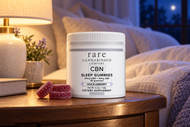
CBN Sleep Gummies
A convenient blend of sleep-focused CBN and calming CBD in vegan, huckleberry-flavored gummies.
- 30 mg CBN + 10 mg CBD per gummy
- Zero THC
- No added melatonin
THC + CBN Sleep Gummies
CBN and CBD with THC for adults who enjoy a dreamy, euphoric nighttime feel.
- 30 mg CBN + 10 mg CBD + 5 mg THC per gummy
- Vegan and huckleberry-flavored
- No added melatonin
Are CBN oils or gummies better?
Oil versus gummy is primarily a choice about format, ingredients, and serving flexibility. A gummy is not inherently stronger than an oil; compare the cannabinoid amounts in the portions you actually use.
An oil lets you measure a serving according to the label. A gummy provides a labeled amount per piece and is convenient when you prefer a chewable format. Consider flavor, sugar, dietary preferences, and whether you want a single cannabinoid or a blend.
A useful comparison is milligrams per serving—not milligrams per container. A 500 mg bottle and a 30 mg gummy cannot be compared directly until you know the oil serving size.
How much CBN or CBD should you take for sleep?
There is no single established CBN or CBD sleep dose that suits every adult. Clinical-study amounts describe research conditions, not instructions to copy at home.
Follow the finished product’s directions, begin with its lowest suggested serving, and account for all cannabinoids you are taking. Avoid adding several new nighttime products at once: changing one variable makes it easier to understand your response.
With THC-containing gummies, patience matters. RCC’s THC + CBN product directions note that effects may take up to two hours to begin. Do not take more simply because you do not feel an immediate effect.
If you take medications or already use a sleep aid, ask a pharmacist or clinician about the combination before adding cannabinoids. CBD can change how some medicines work. [4]
How can you tell whether a CBN sleep product is good quality?
Look for clear serving amounts, accessible batch testing, and complete ingredients. Useful information should be easy to find before buying.
Check these five things:
- CBN per serving: A “hemp blend” total does not reveal the CBN amount.
- CBD and THC separately: Identify each cannabinoid rather than relying on a total.
- A matching certificate of analysis: Compare the laboratory report’s batch number with the product.
- The scope of testing: A potency report answers a different question from testing for contaminants.
- Other nighttime ingredients: Check for melatonin, herbs, allergens, and added ingredients you may already take elsewhere.
When comparing value, consider how many labeled servings the package contains and how much of each cannabinoid those servings provide. The largest number on the front is not always the most useful number.
Frequently asked questions about CBN vs. CBD
Does CBN contain CBD?
No. CBN and CBD are separate compounds. A product can contain CBN alone or combine CBN with CBD. Check the ingredient list and cannabinoid amounts to distinguish them.
Does CBN get you high?
Do not assume a CBN product will feel like THC, but do not use the CBN name as a guarantee of no impairment. Check whether THC is included, and avoid driving if you feel sleepy or affected. Higher-dose CBN effects remain an active research topic. [2, 5]
Can CBD make you sleepy during the day?
Some people find CBD calming without feeling sleepy, while others notice drowsiness. For some, feeling more relaxed makes it easier to focus and stay comfortably alert. Others find CBD better suited to winding down in the evening. Your response can depend on the amount, formula and other medications you take. [4]
Does CBN cause next-day grogginess?
CBN can support a restful night without added next-day tiredness. In a seven-night human trial, 20 mg CBN did not increase daytime fatigue compared with placebo—an encouraging finding for those who want nighttime support while waking refreshed. Individual experiences can vary with the serving and formula. [1]
Is CBN the same as melatonin?
No. CBN is a cannabinoid; melatonin is a hormone involved in sleep-wake timing. Melatonin may help some people fall asleep faster, but it can also cause next-day drowsiness. NCCIH
Rare Cannabinoid Company products contain no added melatonin. We focus on cannabinoid formulas so you can choose your preferred blend without automatically adding a sleep hormone.
Check the complete ingredients of any nighttime product: added melatonin can change how it feels at night and the following morning. If you prefer to include melatonin, purchasing it separately gives you flexibility to choose its amount independently, with guidance on combining nighttime products from your healthcare professional.
night?
Short trials do not establish safety or effectiveness over years of nightly use. If you are considering regular use, review your medications, response, and ongoing sleep concerns with a healthcare professional rather than continually increasing the serving.
Can a THC-free CBN product guarantee a negative drug test?
No. Do not treat a marketing label as a drug-test guarantee. If testing matters for your employment or another requirement, review the applicable testing policy before using cannabinoid products.
Should you choose CBN alone or CBN with CBD?
Choose CBN alone when you want a simpler formula and an easier way to assess that ingredient. Choose a blend when you specifically want both cannabinoids in one product. A longer ingredient list is not automatically a better match.
Explore CBN nighttime options
Your best starting point is a clear formula: know how much CBN and CBD it contains, whether THC is included, and how the serving fits your preferences.
Explore Rare Cannabinoid Company’s CBN sleep gummies and oils to compare nighttime options with and without THC.
This guide is educational and is not medical advice.
Research and references
- Bonn-Miller MO, et al. A double-blind, randomized, placebo-controlled study of the safety and effects of CBN with and without CBD on sleep quality. Experimental and Clinical Psychopharmacology. 2024;32(3):277–284. PubMed. Authors reported affiliations with Canopy Growth Corporation and Wana Brands.
- Lavender IG, et al. Cannabinol for Acute Treatment of Insomnia Disorder in a Randomized Placebo-Controlled Crossover Trial. Journal of Sleep Research. 2026;35(4):e70284. PubMed.
- Narayan AJ, et al. Cannabidiol for moderate-severe insomnia: a randomized controlled pilot trial of 150 mg of nightly dosing. Journal of Clinical Sleep Medicine. 2024;20(5):753–763. PubMed.
- U.S. Food and Drug Administration. What You Need to Know About Products Containing Cannabis or Cannabis-Derived Compounds, Including CBD. FDA consumer information.
- U.S. Food and Drug Administration. Some Medicines and Driving Don’t Mix. FDA driving guidance.